A short history of sushi: from fish in rice to modern rolls
Say “sushi” today and most of us picture fresh salmon, neat rolls and a dish of soy sauce. Its beginnings were very different: sushi started out as a way to keep fish from spoiling.
The beginning: fish fermented in rice
Most historians trace sushi back to Southeast Asia, to the rice-growing lands along the Mekong. There, cleaned fish was salted and packed into cooked rice. As the rice fermented it turned sour, and the fish kept for months. When it was ready, the rice was thrown away and only the fish was eaten.
The method reached Japan around the 8th century and became known as narezushi. The word “sushi” itself comes from an old Japanese adjective meaning “sour” — the name comes from the taste. A living example is funazushi from Lake Biwa, where the fish rests in rice for months, sometimes years.
The rice comes back to the table
In the 15th and 16th centuries, the Japanese began to shorten the fermentation. Fish was eaten before it had fully soured, and the rice was no longer thrown away — it became part of the dish. This stage is called namanare.
The real turning point came in the 17th century, when cooks started adding rice vinegar straight to the rice. There was no longer any need to wait months for sourness. This was “quick sushi”, or hayazushi. The vinegar, sugar and salt in sushi rice today are a legacy of that era.
Edo: nigiri and street stalls
In the early 19th century, sushi became true fast food in Edo, today’s Tokyo. At street stalls (yatai), the cook pressed a handful of vinegared rice in his palm and laid a slice of fresh fish from Tokyo Bay on top. Customers ate it standing, in a bite or two, and went on their way. The spread of this style is usually credited to a cook named Hanaya Yohei.
This is nigiri, and the style is called Edomae — “in front of Edo”, meaning fish from the bay by the city. With no refrigeration, the fish was lightly cured in vinegar, salt or soy sauce, which added flavour and helped it stay fresh.
Across Japan, then the world
After the Great Kantō earthquake of 1923, many sushi chefs left Tokyo and settled across the country. That is how Edo-style nigiri became known all over Japan.
In the second half of the 20th century, refrigeration and new transport links made it possible to bring fresh fish to distant cities. In 1958 the first conveyor-belt sushi restaurant opened in Osaka (we tell that story in our article about Osaka). Sushi became everyday food.
The age of rolls
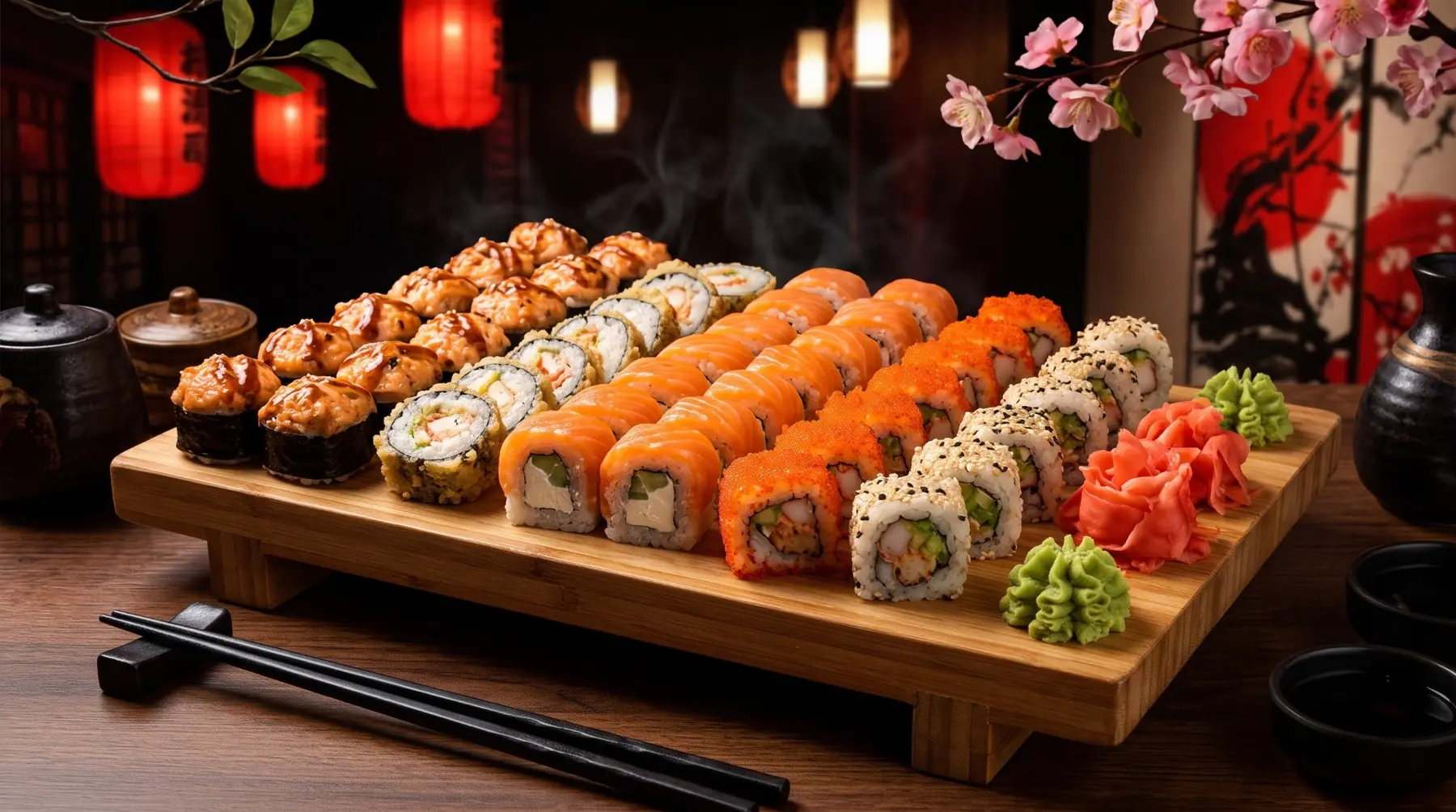
When sushi reached America, it adapted to local tastes. In the 1960s and 70s the California roll appeared on the US West Coast: rice on the outside, nori inside, filled with avocado, crab and cucumber. Then came the Philadelphia roll, named after the famous cream cheese. Tempura-fried rolls and rolls baked under a sauce found their biggest fans outside Japan — our region included.
Today sushi is both a thousand-year-old tradition and a cuisine that keeps changing. On our menu we try to bring the two together: from classic rolls and maki to hot and baked rolls.