Rolls, nigiri, maki: what’s the difference and how to eat them
Open a sushi menu for the first time and the names can blur together. It’s actually simple: the difference lies in how rice, nori seaweed and filling come together. This short guide will make your next order easier.
Maki — the classic roll
Maki (makizushi) is rolled with a bamboo mat called a makisu: nori on the outside, vinegared rice and filling inside. Thin rolls with a single filling are hosomaki — cucumber kappa maki, for example, or salmon maki. Thick rolls with several fillings are futomaki.
Uramaki — rice on the outside
When people here say “roll”, they usually mean uramaki: rice outside, nori inside. The outside is sprinkled with sesame or tobiko roe, or topped with thin slices of fish. California and Philadelphia rolls are both uramaki.
Nigiri and gunkan
Nigiri is a small hand-pressed mound of rice topped with a slice of fish or seafood. Gunkan (“battleship”) is rice wrapped in a strip of nori and topped with roe, chopped fish or sauce — the nori keeps the soft topping in place.
By the way, sashimi is simply thinly sliced raw fish with no rice. Strictly speaking it isn’t sushi, but it’s a close relative at the same table.
Hot and baked rolls
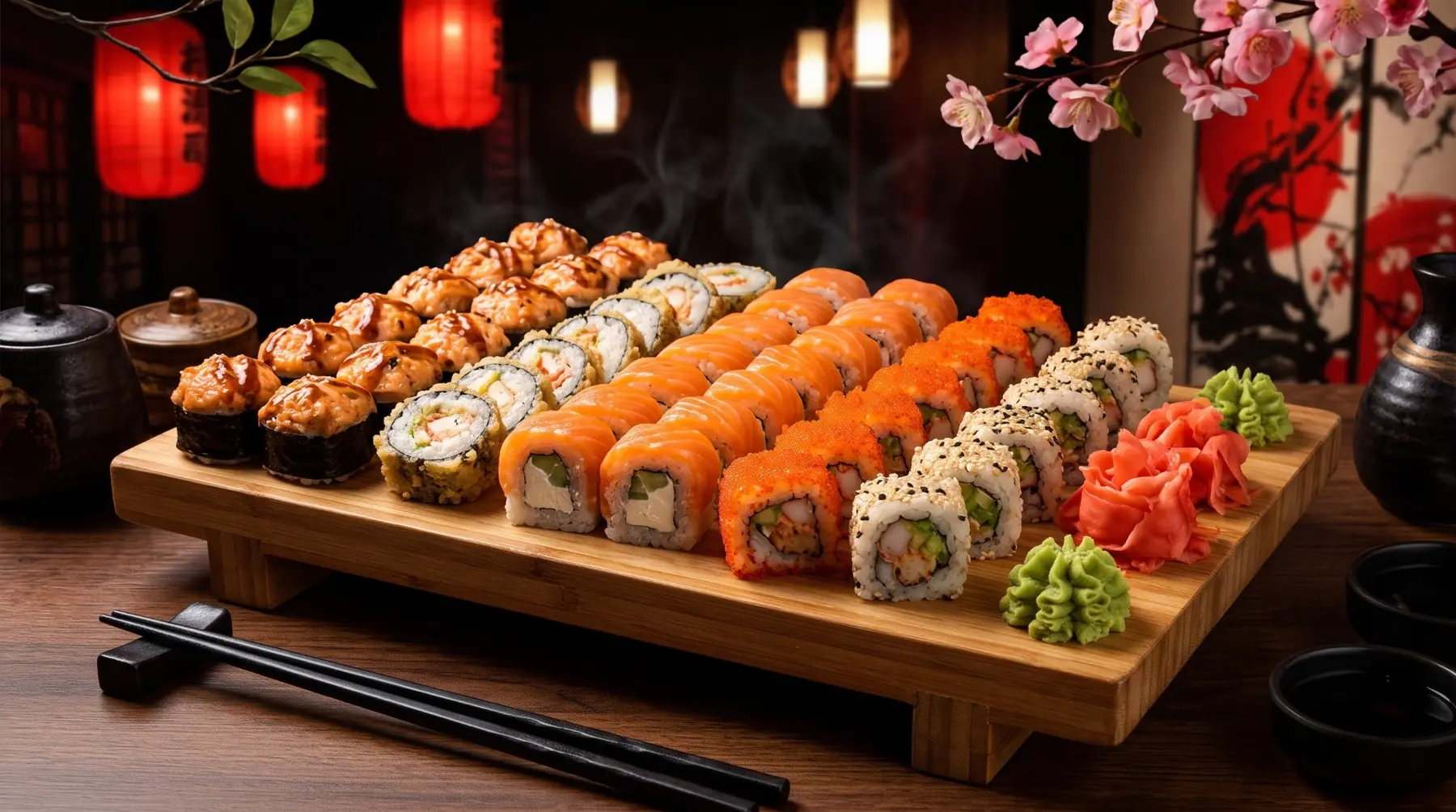
These rolls were born outside Japan and are among the most loved here. Tempura rolls are dipped in a light batter and fried — crisp outside, hot inside. Baked rolls go into the oven under a creamy sauce or cheese. Next to cold rolls, they bring a warm, rich note to the table.
How to eat sushi
- Soy sauce — just a little. Dip nigiri fish side down, not rice side: the rice soaks up the sauce and falls apart.
- Wasabi — in Japan it’s usually not stirred into the soy sauce; a little goes straight onto the roll instead. That way you taste both the heat and the fish.
- Ginger (gari) — don’t put it on top of a roll. It’s there to refresh your palate between different pieces.
- One bite — rolls and nigiri are usually eaten whole. Eating with your fingers is perfectly polite.
- Chopsticks — don’t stand them upright in rice or pass food from chopsticks to chopsticks: in Japan both are associated with funeral rites.
- Order — start with lighter flavours (cucumber, white fish) and move on to richer ones (salmon, hot rolls).
How much per person?
In our experience, about 12 pieces per person is right. That’s why every set on our menu shows roughly how many people it serves. Sets range from 24 to 94 pieces — from dinner for two to a big party. Can’t decide? Message us on WhatsApp and we’ll help you choose.